




Can Inositol Cause Breakouts? Here's the Science

Search “inositol for acne” and you’ll run straight into a contradiction. As a holistic esthetician, this doesn't surprise me anymore. Over the years I've been working with clients, I've come to realize we are all extremely individual. What works for one person may not work for another.
When it comes to inositol, there are two clear experiences. On one end of the spectrum, women whose stubborn hormonal breakouts finally cleared after starting. On the other: people who watched their skin clearly worsen within days or weeks.
Both are true, and whether you’re in one camp or the other is typically dependent on your unique biology. Before it lands in your cart, here’s what decides which side of that split you fall on.
What is inositol?
Inositol is a sugar-like compound your body produces on its own and absorbs from food: citrus, beans, whole grains. It’s often grouped with the B vitamins. Several forms exist, but two are the most well-known:
- Myo-inositol: the dominant form in the body, and the one nearly all the research rests on.
- D-chiro-inositol: converted from myo-inositol.
In a healthy body, the two circulate at roughly a 40-to-1 ratio, myo to D-chiro.
Both forms work as second messengers for insulin: internal signals that help insulin move sugar into your cells. When that signaling falters, insulin resistance follows. And insulin resistance sits directly upstream of a particular kind of acne.
How does inositol support clear skin?
For the right person, inositol is actually one of the more helpful supplements for hormonal acne.
When cells stop responding to insulin (also known as insulin resistance), the body compensates by making more of it. That excess insulin raises IGF-1 (a growth factor that drives acne) and lowers SHBG, the protein that keeps testosterone bound and inactive. More IGF-1 and more free androgens is the exact combination behind hormonal, cyclical breakouts.
Myo-inositol works against that insulin to acne pathway. Across trials, largely in women with PCOS, it has been shown to improve insulin sensitivity, lower total and free testosterone and DHEA-S, and raise SHBG over several months. Alongside those hormonal shifts, one small study of 50 women with PCOS saw acne and excess hair growth improve after six months.
So, why does inositol cause breakouts in others?
There are two reasons why inositol might cause breakouts.
#1 Everyone's hormones are different
The first comes down to estrogen.
Estrogen is your skin's best friend. It’s strongly associated with clear, healthy skin: estrogen supports collagen, keeps skin hydrated and the barrier strong, and helps hold oil production and androgens in check.
It’s a big part of why skin often looks its best mid-cycle, when estrogen peaks, and why breakouts tend to cluster in the low-estrogen days right before your period.
So anything that pushes estrogen down can nudge skin in the wrong direction, especially if you are already low in estrogen. And this is exactly how inositol can contribute to breakouts.
D-chiro-inositol is an aromatase inhibitor: it blocks the enzyme that converts testosterone into estrogen. On the other hand, the myo-inositol is generally believed to increase estrogen.
Almost every inositol supplement for women is myo-inositol-dominant, with only a small amount of D-chiro, in its 40:1 patented ratio.
From this, it would seem safe to assume that most inositol supplements (assuming they're the right 40:1 ratio) don't lower estrogen. But, the human body and supplements just aren't that cut and dry.
Sensitivity is individual, and we don’t really know whether even small amounts can move hormones in someone who’s already low in estrogen.
More importantly, while myo-inositol is generally thought not to lower estrogen, some studies show it can actually have the opposite effect.
For those of us who are especially sensitive or lower in estrogen already, it might mean we accidentally lower our estrogen further and set the stage for breakouts.
#2 Inositol and your microbiome
There’s also a second mechanism, unrelated to hormones: Candida. Inositol is a nutrient that yeast — candida included — readily feeds on. For someone already dealing with candida or yeast overgrowth, adding a supplement that feeds it can pour fuel on the fire, and the skin is often where that internal imbalance surfaces. So, if you know Candida overgrowth is an issue you're facing, or suspect it, and are simultaneously experiencing breakouts, this might be why.
Altogether, this is why inositol is so hard to predict. Even a well-formulated, myo-dominant product is still influencing a hormonal system that behaves differently in every body. For some skin, that infleunce settles things. For others, especially anyone already running low on estrogen or dealing with candida, it might set off breakouts.
How do you know if inositol will cause acne?
There's no straightforward way of knowing if inositol could contribute to your breakouts.
Inositol is supposed to help with excess male hormones (as is the case with PCOS), and as a result, breakouts. But not every case of excess male hormones is accompanied by the same levels of estrogen:
- Some cases of excess male hormone activity is accompanied by estrogen dominance (too much estrogen).
- On the other hand, some cases of excess male hormone activity can be accompanied by lower levels one estrogen.
- Even more confusing, some people can have low estrogen and no excess of male hormones at all, even though their symptoms (breakouts, abnormal hair growth, and hair loss) may look like they have excess testosterone.
So, even if you've identified your breakouts as hormonal — along the jawline and chin, tied to your cycle, alongside irregular periods, sugar cravings, or a PCOS diagnosis — it's not a surefire way to determine whether inositol will help or harm your breakouts.
Instead, if you're interested in trying inositol for acne or the hormonal imbalances that accompany it, it's best to experiment. If you experience breakouts from inositol, don't be afraid to question whether it's the right supplement for you.
Either way, this isn’t a diagnosis. If you suspect PCOS or a hormone imbalance, testing with a practitioner beats guessing — and it gives you a baseline to measure whether inositol is actually helping or hurting. High androgens and estrogen levels in particular are best confirmed before you start layering in supplements aimed at them.
If you decide to try inositol
If you decide to try inositol, the clinically-backed approach is combination products with the 40:1 myo-to-D-chiro ratio.
Monitor your skin and, ideally, work with a functional practitioner who can monitor your hormonal progress with real data. I'd also avoid changing any other supplements or skincare products during this time to make sure you're really isolating the change.
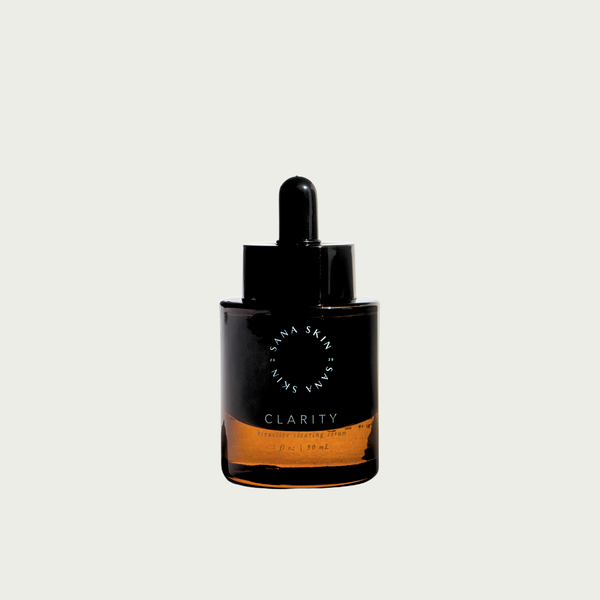
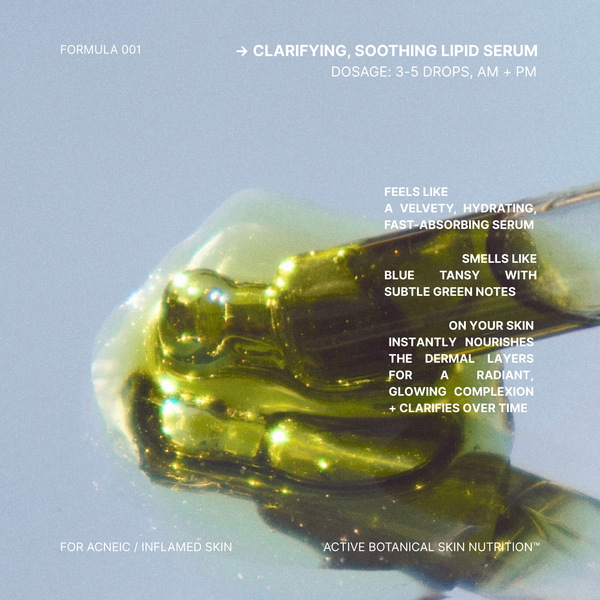
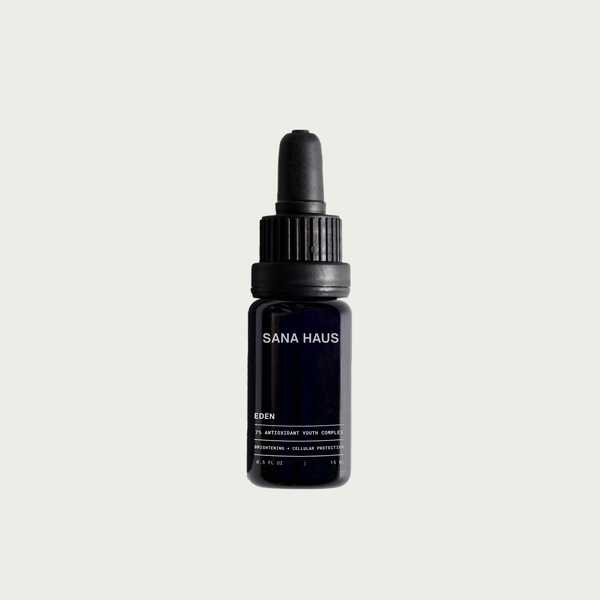
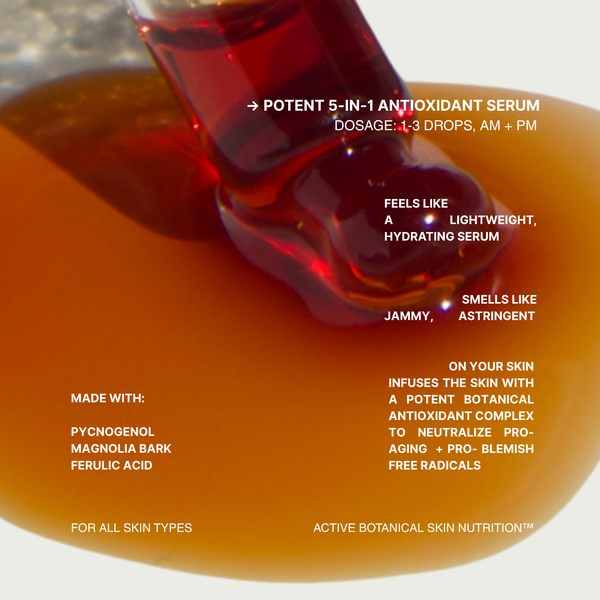
Support acne-prone skin topically


The bottom line
Inositol resists a clean verdict. For hormonally driven, insulin-linked acne, it can be one of the few supplements that reaches a true root cause. For others — the wrong form, an already-low estrogen state, candida in the mix, or simply a sensitive system can set off breakouts just as easily.
Have any questions about inositol for acne? Or a supplement you’d like me to break down next? Leave them in the comments.
References +
- https://pubmed.ncbi.nlm.nih.gov/19551544/
- https://pubmed.ncbi.nlm.nih.gov/31298405/
- https://pmc.ncbi.nlm.nih.gov/articles/PMC8056130/
- https://pmc.ncbi.nlm.nih.gov/articles/PMC8896029/
- https://pmc.ncbi.nlm.nih.gov/articles/PMC5655679/
- https://pmc.ncbi.nlm.nih.gov/articles/PMC4963579/
- https://pmc.ncbi.nlm.nih.gov/articles/PMC4565837/
- https://pmc.ncbi.nlm.nih.gov/articles/PMC9455095/
- https://pmc.ncbi.nlm.nih.gov/articles/PMC5318522/
- https://pmc.ncbi.nlm.nih.gov/articles/PMC7128037/
- https://pmc.ncbi.nlm.nih.gov/articles/PMC11859446/
- https://pmc.ncbi.nlm.nih.gov/articles/PMC2423082/
- https://www.sciencedirect.com/science/chapter/edited-volume/abs/pii/B9780323916738000042
- https://pmc.ncbi.nlm.nih.gov/articles/PMC10926319/
- https://www.sciencedirect.com/science/article/pii/S2352647519300012


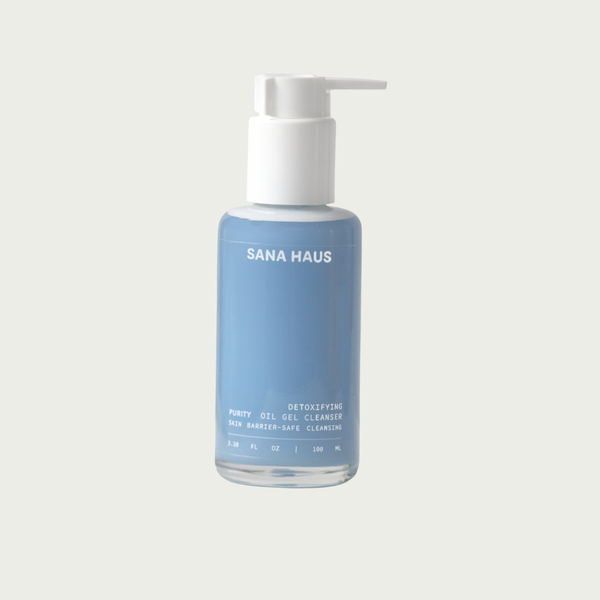
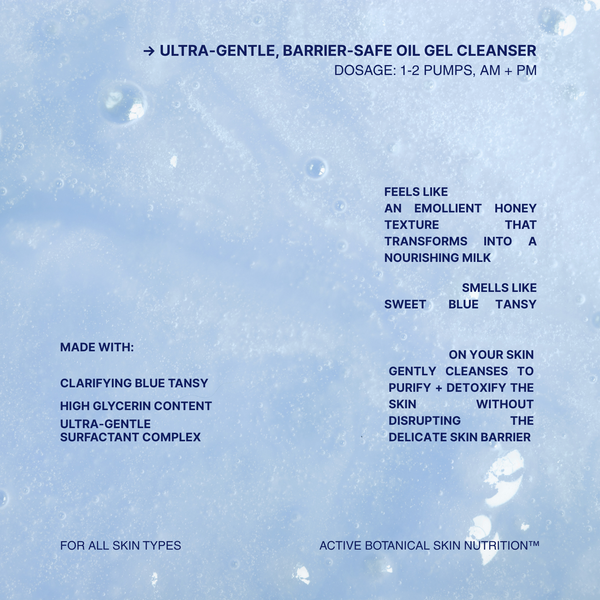
Purity Detoxifying Gel to Milk Cleanser
An ultra-gentle, skin barrier-safe cleanser formula. Made with...
leave a comment